


Zenlit: Drive, Earn and Save
4.3330.00 Reviews
App Specs
- Version
- 2.4.35
- Updated On
- License
- Free
- Downloads
- 100,000+
- Developer
- Zenlit Labs, Inc
- Categories
- Travel & Local
- Platform
- Android
Screenshots
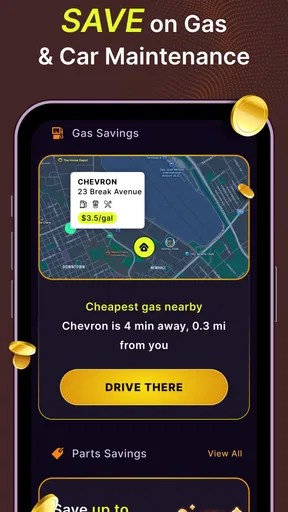
 Analysis by AppCompare
I found Zenlit: Drive, Earn and Save most interesting when I looked at it as a shared household driving tool rather than just another travel app. Its central idea is simple: driving safely can lead to real-world rewards. That makes it different from a standard map, fuel-price checker, or trip planner, because the motivation is tied to how you drive, not only where you are going.
In my experience, that distinction matters most when more than one person uses the same car. A parent, partner, or housemate may all take turns driving, but each person has different habits and different expectations about privacy, rewards, and responsibility. Zenlit can fit into that routine, but it works best when everyone agrees on who is using the account and what the app is meant to do before relying on it regularly.
This is a free Travel & Local app from Telenav, Inc., with an Everyone content rating. It has reached over one hundred thousand installs and holds a 4.3 average from around one thousand ratings, alongside hundreds of written reviews. Those figures suggest that it has attracted a meaningful early audience, although I would still treat it as a focused driving companion rather than a complete replacement for every navigation or vehicle app.
How Zenlit fits into a shared driving routine
When several people share a car, I find it helps to agree on the purpose of a driving app before anyone starts using it. A simple household rule—who opens the app, and when everyone will review how it fits—can keep the routine clear without turning trips into a contest. With that groundwork in place, the next consideration is how to make the arrangement comfortable and fair for everyone.
A realistic household example
Imagine a household where one person drives to work in the morning, another uses the car for errands in the afternoon, and a teenager occasionally borrows it. A reward-based driving app sounds useful in that situation, but only if the driving activity is associated with the right person and the people involved understand the arrangement. Otherwise, the reward motivation can become less important than the confusion around whose trips are being counted.
I would begin with one primary user and a clear purpose. For example, the regular driver could use Zenlit during commuting, while the other household members decide whether they want their own separate use of the app. That approach avoids treating one shared phone, one login, or one vehicle as if they automatically represent the entire family. The car may be shared, but the account relationship should be discussed rather than assumed.
The app’s appeal is strongest for someone who drives frequently and wants an extra reason to maintain calm, careful habits. A person who already spends substantial time behind the wheel may find the reward angle more engaging than a conventional driving score. Someone who drives only occasionally may not see enough value to justify changing their routine, especially if they already use another app for directions and vehicle information.
Worth Reading Before You Choose

EA SPORTS FC Mobile 26 Is a Bigger Football Game, but It Takes Time

Flipboard Shows What News Apps Must Do Beyond the Feed

Switching to Android Auto Means Rethinking Your Driving Routine

Google Calendar Makes a Crowded Week Easier to Manage

Ludo King Makes the Most of the Minutes Between Plans

Baby Panda World Brings Quick Play to Modern Phones, but Its Game Library Feels Busy
What I would clarify before using it
Before making Zenlit part of a household routine, I would settle a few practical questions between the people using the vehicle. Who is going to operate the app? Is the goal personal motivation, shared savings, or simply trying the service? If several people drive, will they use separate accounts or keep one person as the main participant? These are not technical details I would leave until later, because reward tracking becomes harder to interpret when the account boundaries are vague.
I would also avoid handing a phone to another driver with the app already active and assuming that everything will sort itself out. A shared device can blur the line between the person holding the phone, the person driving, and the person receiving any benefit. That is especially important when a household wants to compare driving habits or decide whether the rewards are worth continuing.
My practical tip is to test Zenlit during a small number of ordinary trips first. Use a familiar commute or a routine shopping run, then check whether the experience feels natural and whether every driver understands the arrangement. This is more useful than judging the app after one unusual journey, because a single long trip may not reflect how it fits into daily life.
Coordination is more important than the reward headline
The phrase “earn and save” is attractive, but I would not build a household budget around it immediately. Rewards can be a pleasant extra, yet they should not become the reason someone takes unnecessary trips, changes a safe route, or uses the phone while driving. The safest workflow is to prepare before moving, let the app support the trip in the background of your routine, and review the result only after parking.
For a couple sharing a vehicle, Zenlit could become a small point of coordination: one person uses it on regular driving days, and both decide later whether the experience is worthwhile. For a larger household, I would keep expectations modest. The app may encourage better habits, but it is not a substitute for agreeing on who drives, who pays for fuel, or how a shared car is maintained.
One non-obvious trade-off is that the more people participate through one vehicle, the more difficult it can be to connect a reward outcome with a specific driver. If the household wants personal accountability, separate usage is easier to understand. If the household only wants a general incentive to drive carefully, a shared arrangement may feel simpler, but it also gives up some clarity.
Age, trust, and the Everyone rating
The Everyone rating makes the app broadly suitable from a content perspective, but I would not read that as a reason to give unrestricted driving responsibility to a young person. Safe use still depends on the driver being legally permitted and practically ready to operate a vehicle. An age label describes the app’s content suitability; it does not replace a parent’s judgment about driving experience, phone habits, or account access.
For an older child or new driver, I would frame Zenlit as a possible reminder to develop consistent habits, not as a competition. The reward element could be motivating, but it should never encourage hard braking, rushed journeys, or checking the screen while moving. A parent who wants to try it with a young driver should agree on the boundaries first and keep the conversation focused on safety rather than points or savings.
Trust also matters between adults. If one partner is uncomfortable with how driving activity is represented, the right response is a conversation before use, not silent monitoring. I would only recommend a shared setup when everyone understands what participation means in practice. Zenlit may be useful for encouragement, but it should not become a source of suspicion inside the household.
Setup expectations and device boundaries
The current version is 2.4.35 and requires at least iOS or Android version 10, depending on the device platform. That makes checking the phone’s operating system an important first step before planning a household rollout. If the main driver’s phone is older, the app may not be a practical option for that person even if another family member’s device is compatible.
I would install it on the phone of the person who actually drives most often, rather than choosing a shared tablet or spare device simply because it stays in the car. A device that remains in the vehicle can create awkward account boundaries and may not represent the driver consistently. The cleanest setup is usually the one connected to the person who is responsible for the trip and can review the app outside the moving vehicle.
Another useful habit is to separate setup time from driving time. Explore the interface, understand the reward flow, and make any necessary decisions while parked. If a household is testing the app with several drivers, each person should know what they are expected to do before starting a journey. That reduces the temptation to troubleshoot during a trip, which is a poor trade for any reward.
Where it differs from ordinary driving apps
A navigation app is usually judged by directions, route choices, traffic information, and how quickly it gets someone to a destination. A fuel app is judged by local prices and convenience. A vehicle-monitoring tool may focus on maintenance or trip records. Zenlit sits in a different space: its main reason to exist is to connect safer driving with tangible benefits.
That makes it complementary rather than automatically superior. I would still use a dedicated navigation option when route guidance is the priority, and I would not expect Zenlit to replace a vehicle manufacturer’s tools or a service designed specifically for fuel costs. The better question is whether its reward structure adds something to the apps already on the phone.
The strongest comparison is with doing nothing. Many drivers already know they should avoid aggressive behavior, but a reward-oriented system can make that intention feel more concrete. The weakness is that motivation based on rewards may fade if the benefit feels too distant or if the driver does not enjoy the routine. In that case, a simple navigation app may be more useful because it solves an immediate problem on every journey.
Three practical ways I would use it
First, I would use Zenlit as a commuting experiment. A regular route provides a stable routine, making it easier to decide whether the app fits naturally into the day. I would avoid changing my route or driving style to chase an outcome; the point is to see whether safer habits and ordinary travel can coexist without extra distraction.
Second, I would use it as a household conversation starter. Instead of saying that one driver is better than another, the family could discuss what calm driving looks like, when phones should be left alone, and whether a reward is actually motivating. This is a less obvious benefit because the app can support a shared goal even when the account itself remains personal.
Third, I would use it selectively during routine trips rather than treating every journey as a test. If a driver is already stressed, unfamiliar with the road, or responsible for several passengers, attention should stay on the road and the surroundings. The reward should never outrank the immediate demands of driving.
These uses also reveal a limitation: Zenlit is not likely to solve poor household coordination by itself. If people disagree about account ownership, phone use, or what counts as safe driving, an app cannot replace that discussion. Its value depends heavily on the habits surrounding it.
What may feel frustrating
The reward concept creates an expectation of visible progress, so users may feel disappointed if they want an instant payoff from every trip. I would approach the app with patience and judge it over a normal routine rather than one drive. A reward system is most convincing when it quietly supports behavior that is already sensible, not when it demands constant attention.
There is also a psychological limitation. Once a driver starts thinking about earning during a trip, the incentive can become distracting if handled poorly. I would never interact with the phone while moving, and I would be cautious about any household rule that turns safe driving into a scorekeeping contest. The app should reinforce concentration, not compete with it.
Shared use can introduce another kind of friction. If several people use the same car but only one person’s account is active, the resulting history may not tell the whole story. That does not make the arrangement useless, but it means the household should avoid drawing strong conclusions about individual behavior from a mixed routine.
Who should try it, and who should skip it
I would recommend Zenlit to frequent drivers who like practical incentives and are willing to treat the app as a background companion. It is a reasonable fit for someone who wants driving to feel a little more rewarding without paying for another service. It may also suit a household that can agree on clear account boundaries and wants a gentle way to talk about safer habits.
I would be more cautious for people who already feel overloaded by driving apps. If the phone is crowded with navigation, parking, fuel, maintenance, and messaging tools, adding another layer may create more mental clutter than value. A driver who wants only directions should probably choose the simplest navigation tool that meets that need.
I would also skip it as a family project if the real goal is surveillance or punishment. The Everyone rating is reassuring for general content, but it does not make the app a substitute for parental supervision, driver training, or honest communication. Its reward angle is better suited to encouragement than enforcement.
My household verdict
After looking at Zenlit through the lens of shared vehicles and different drivers, I see a focused app with a clear reason to exist. It does not try to be every kind of travel tool at once. Instead, it gives careful driving a potential practical benefit, which can make ordinary commuting feel more purposeful.
Its best quality is the way it can turn an abstract goal into a routine conversation: drive calmly, keep attention on the road, and see whether the experience produces something useful afterward. The most important condition is that each household decides who is using the app and why. Without that agreement, shared-device use can make the results confusing.
Telenav, Inc. has positioned this as a free app, so trying it does not require a purchase decision. I would still measure the cost in attention and complexity. If it stays out of the way and fits naturally into regular driving, it can be a worthwhile addition. If it encourages screen checking, arguments about scores, or unclear tracking between family members, it is not worth forcing.
My final recommendation is straightforward: try it with one responsible driver, on familiar trips, with expectations kept realistic. Give the household time to decide whether the reward idea genuinely supports safer habits. For the right driver, Zenlit is most useful as a quiet incentive, not a replacement for navigation, supervision, or common sense. That makes it worth considering, especially for people who spend a lot of time on the road and want their everyday driving routine to offer a little more in return.
Pros
- Combines driving rewards with savings tools in one app.
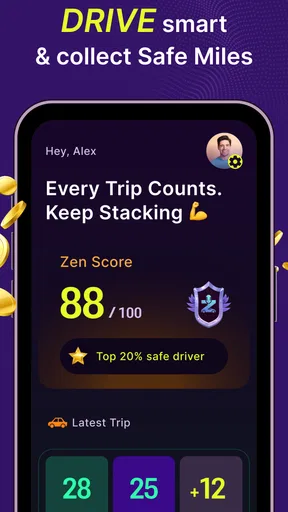
- Simple interface makes tracking trips and earnings straightforward.
- Can motivate users to reduce unnecessary driving expenses.
- Useful for drivers looking for extra value from regular journeys.
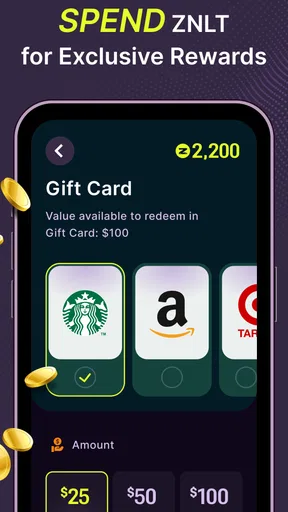
- Digital rewards may be redeemed without complicated setup.
Cons
- Earnings may be modest and depend heavily on driving frequency.
- Reward availability can vary by location and eligibility.
- Requires access to trip or location data for core features.
- Some offers may include restrictions
- expiration dates
- or minimums.
- Battery and mobile data use may increase during active trip tracking.
FAQs for Zenlit: Drive, Earn and Save
What is Zenlit: Drive, Earn and Save?
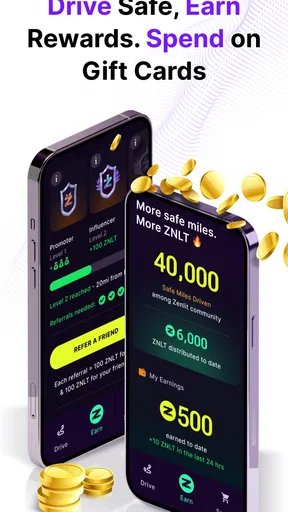
Zenlit: Drive, Earn and Save is designed to help users combine everyday driving with opportunities to earn rewards and manage savings. The app may use information about your trips, driving activity, or participation in available offers to calculate benefits. Before signing up, review the current eligibility requirements, supported locations, reward rules, and account conditions, since available features can vary by region and may change over time.
How can I earn rewards with Zenlit?
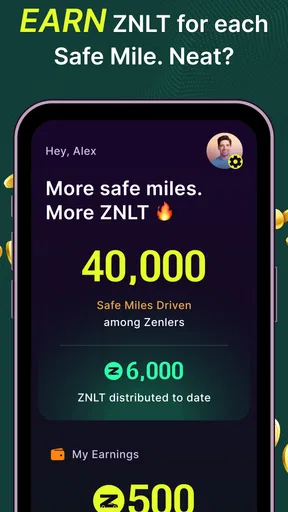
Earning opportunities generally depend on completing the activities supported by Zenlit, such as driving, recording eligible trips, meeting mileage or participation requirements, or using selected partner offers. After testing the app, it is important to note that rewards should not be viewed as guaranteed income. Read the terms carefully to understand how earnings are calculated, when they are credited, and whether minimum withdrawal limits or verification steps apply.
Does Zenlit track my location or driving behavior?
Because Zenlit focuses on driving-related benefits, it may request access to location services, motion data, trip information, or other device permissions. These permissions can be necessary for detecting journeys and validating participation, but they also involve privacy considerations. Before downloading, check the app’s privacy policy and permission settings. You should understand what data is collected, why it is used, how long it is retained, and whether tracking can be paused.
Is Zenlit: Drive, Earn and Save free to download?
The application may be available to download without an upfront charge, but users should still check for possible conditions inside the app. Some services can include optional purchases, partner requirements, subscription-related features, or limitations connected to reward programs. Store availability and pricing may differ between Android and iOS. Always review the official store listing and Zenlit’s terms before providing payment details or committing to any paid feature.
What should I check before creating a Zenlit account?
Before registering, confirm that Zenlit operates in your country and that your vehicle, driving habits, and device meet the participation requirements. You may need to provide personal information, verify your identity, enable background permissions, or connect additional services. Also review withdrawal methods, reward expiration rules, cancellation procedures, customer support options, and account closure terms so you know exactly what happens to your data and accumulated rewards.


